
Submitted by Anne T on Tuesday, 02 June 2026 (449 reads)
Modern SitesA small stone labyrinth on Bryher, one of the Isles of Scilly. Created in the 1990s, the labyrinth is formed from rounded rocks gathered from the adjacent storm beach and is 5.0 metres in diameter, with two larger rocks placed at the entrance. The design is basically a spiral with five circuits, but with several choices and switch-backs that increase its complexity and make it a simple maze rather than a true labyrinth. Image submitted by Anne T
Submitted by Anne T on Tuesday, 02 June 2026 (386 reads)
Roman, Greek and ClassicalThe second largest Roman olive oil mill in the entire Roman Empire and the largest in Tunisia, dating to the 2nd century CE. The site is famous for the Latin inscription 'CIL VIII, 1193 and 2358', transcribing a senatus consultum from 138 CE that authorised the organisation of a bimonthly market - exceptional documentary evidence for the rural economy of Roman North Africa. Image submitted by Anne T
Submitted by TheCaptain on Tuesday, 02 June 2026 (23081 reads)
Neolithic and Bronze AgeThe main Calanais I site forms a sort of Celtic Cross shape. Check the nearby sites list and map from our page for more details of this and each of the dozens of surrounding standing stone sites. Image submitted by Andy B
Submitted by Anne T on Monday, 01 June 2026 (609 reads)
Mesolithic, Palaeolithic and EarlierA large sandstone rock shelter near Berdorf in the Mullerthal region of eastern Luxembourg, part of a dramatic landscape of towering sandstone cliffs and narrow gorges known locally as Luxembourg's "Little Switzerland". The Mullerthal sandstone formations created natural shelters that attracted human settlement from the Mesolithic onwards. Image submitted by Anne T
Submitted by enkidu41 on Sunday, 31 May 2026 (22923 reads)
Neolithic and Bronze AgeA stone circle on Mull set in a natural amphitheatre formed by the surrounding hills - a magical place. The 13.4m diameter circle originally consisted of 9 stones, one of which has disappeared and been replaced with a small boulder. The stones range in height from 1.2m to 2m and have flat faces faced inwards. There are 3 outliers, the nearest of which is 0.85m high and lies just to the SE, the tallest 2.7m to the SW. Image submitted by MegalithicMouse
Submitted by Kuba on Sunday, 31 May 2026 (188 reads)
MuseumsA medium size museum in Palembang, Indonesia. As well as artefacts from the medieval Sriwajaya period it contains some stunning sculptures of megalithic South Sumatra. More on our page. Image submitted by Kuba
Submitted by donhelfrich on Sunday, 31 May 2026 (1417 reads)
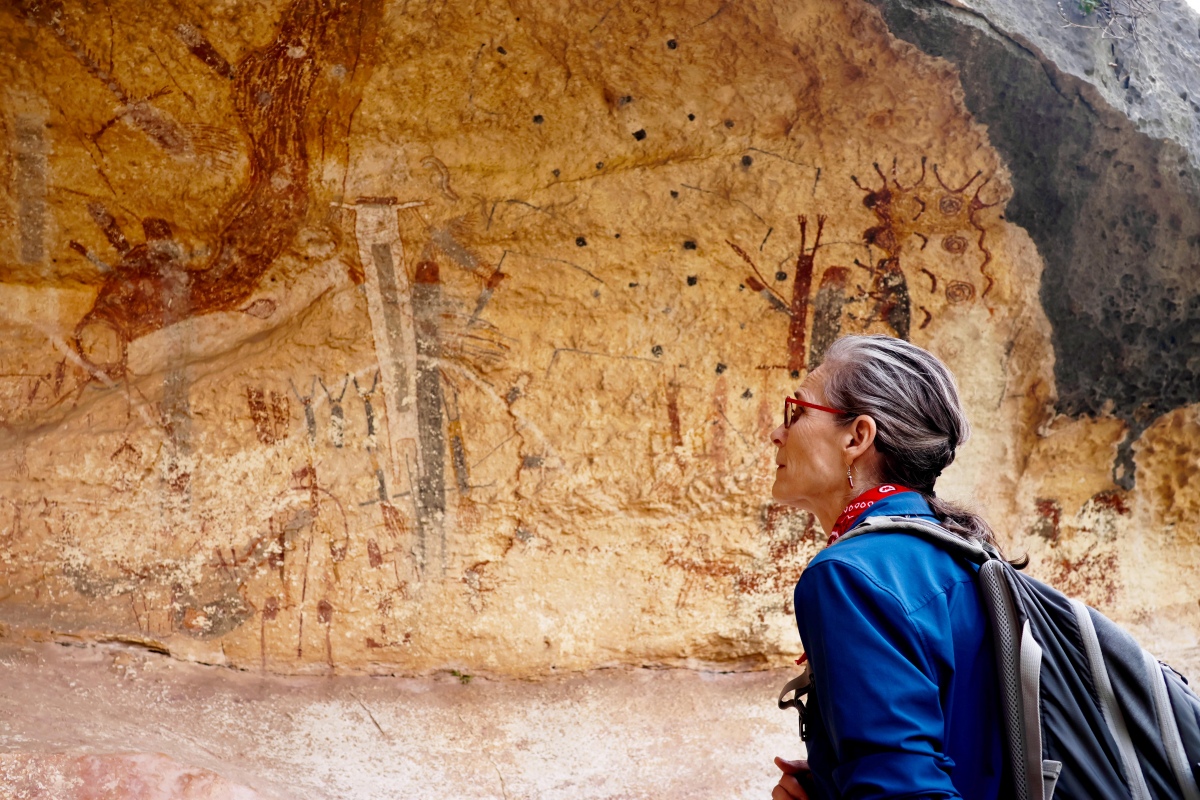
Pre-ColumbianAn Ancestral Pueblo village occupied between 1100 and 1500. Part of the larger Bandelier National Monument system, though less visited. At Tsankawi you take a 1.5 mile walk along a mesa, viewing cavates, petroglyphs and the Ancestral Pueblo village of Tsankawi. Ladders are a required part of this trail! Image submitted by stonetracker
Submitted by Anne T on Sunday, 31 May 2026 (818 reads)
Neolithic and Bronze AgeA Neolithic stone axe quarry on Lambay Island, a small island 4 km off the north Dublin coast, east of Rush. Stone from the island's porphyritic andesite (Lambay Porphyry) outcrops was quarried and worked into polished stone axes from the early Neolithic onwards. Lambay axes have been found at sites across eastern Ireland. The only Neolithic stone axe quarry in Ireland with evidence for all stages of production, from quarrying to final polishing. The island setting meant all raw material had to be transported to the mainland by boat, indicating the value placed on this particular stone source and the maritime capabilities of Neolithic communities in the Irish Sea. Image submitted by Anne T
Submitted by hamish on Tuesday, 26 May 2026 (18516 reads)
Neolithic and Bronze AgeOne of the smallest Penwith chambered tombs. Only 3 of the 4 support stones remain so the 2.9m square capstone has slipped and leans against the 3m x 1.7m x 1.7m high chamber. Similar to Chûn Quoit but sadly not as well preserved. The capstone has fallen and now leans on the two remaining uprights. There is a possible cup mark on the capstone. Image submitted by Bladup
Submitted by Tonnox on Tuesday, 26 May 2026 (1938 reads)
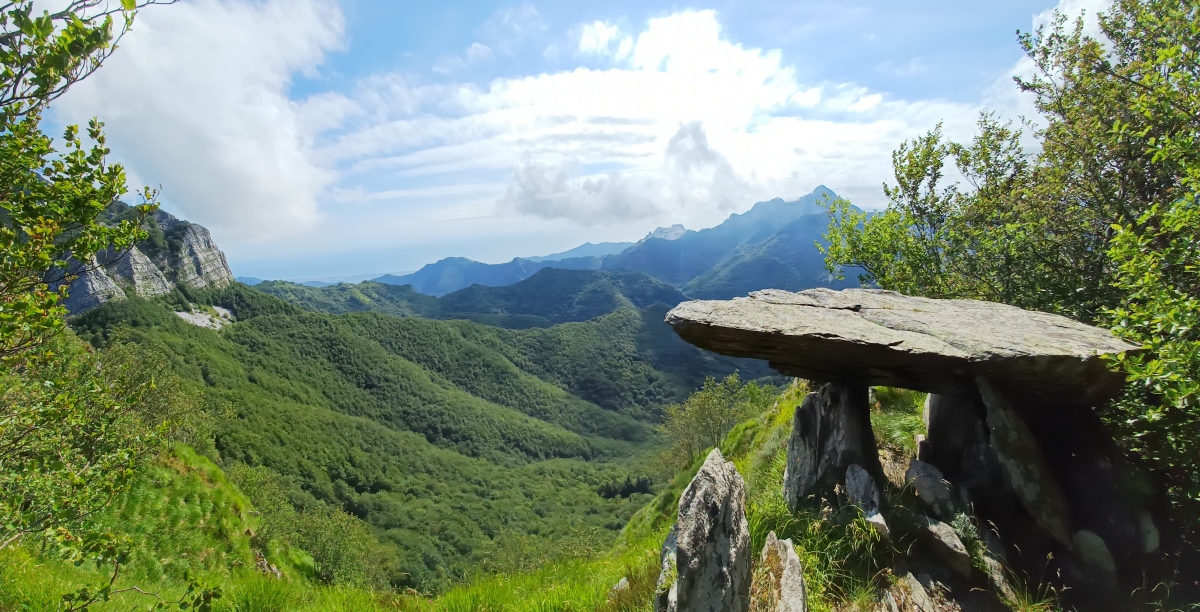
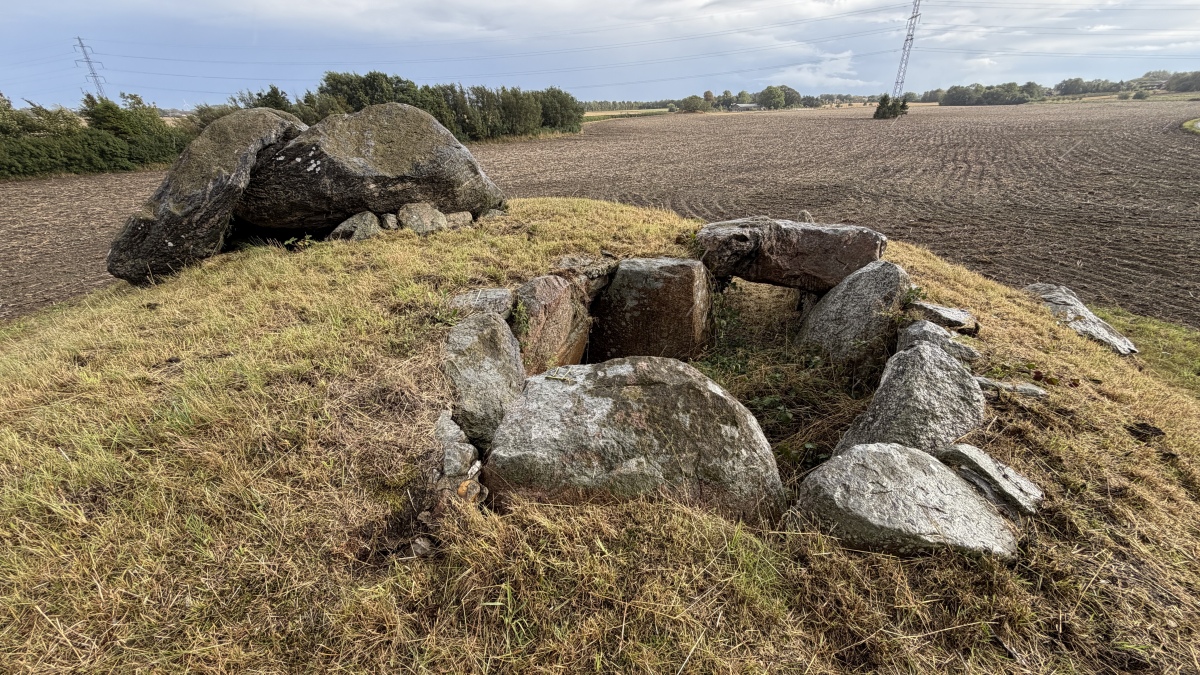
Neolithic and Bronze AgeA Dolmen on a mound. 2 x 8 x 7 meters in size. With one large capstone and 6 orthostats (upright stones) with cup marks. Image submitted by Tonnox
Submitted by dooclay on Monday, 25 May 2026 (652 reads)
Neolithic and Bronze AgeAt a prominent height in an area of gravel eskers. A shallow forecourt at the eastern end opens between tall portal stones into a two-segment burial gallery. One huge slipped capstone survives. The gallery is surrounded by a rectangular cairn, approx. 30m long x 15m wide. The gallery is 2.25m wide. In the rear of the cairn are two lateral chambers, originally reached between portals tones from the long sides of the cairn. Image submitted by dooclay
Submitted by stonetracker on Monday, 25 May 2026 (662 reads)
Multi-periodA state-run historic site on New Mexico State Road 4 in Jemez Springs, New Mexico. It preserves the archaeological remains of the 14th-century Native American Gíusewa Pueblo, which had an estimated 200 rooms in five blocks, including two kivas (one pictured here); and a 17th-century Spanish colonial mission church. Image submitted by stonetracker
Submitted by drolaf on Monday, 25 May 2026 (672 reads)
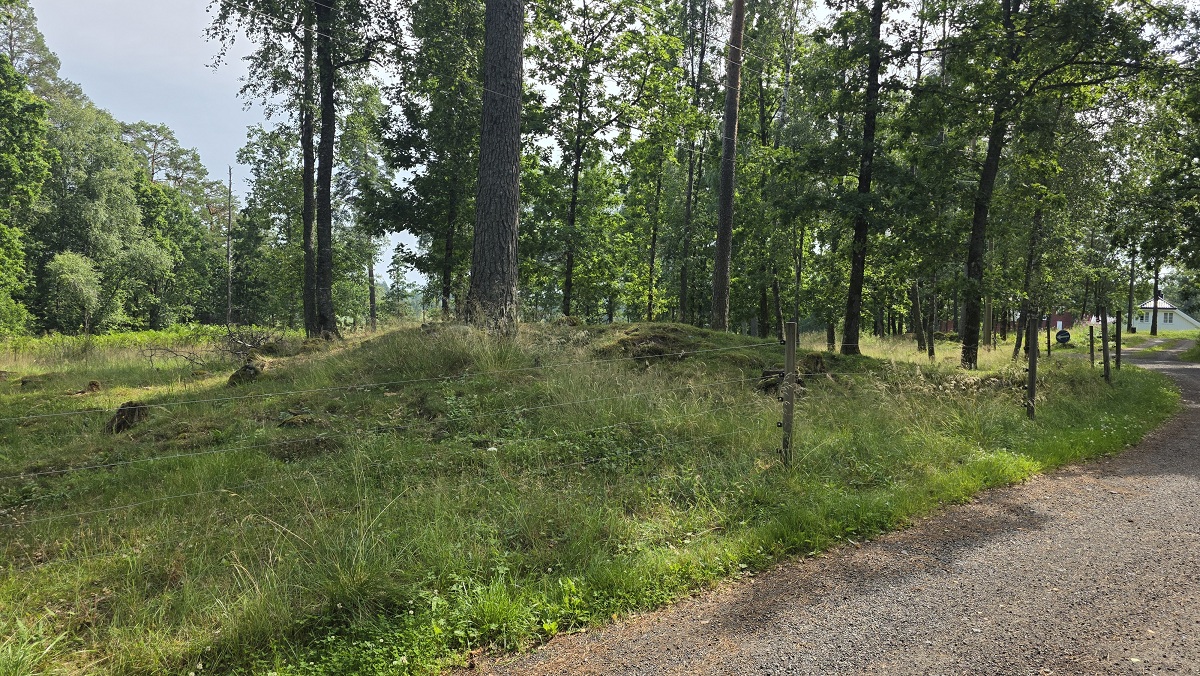
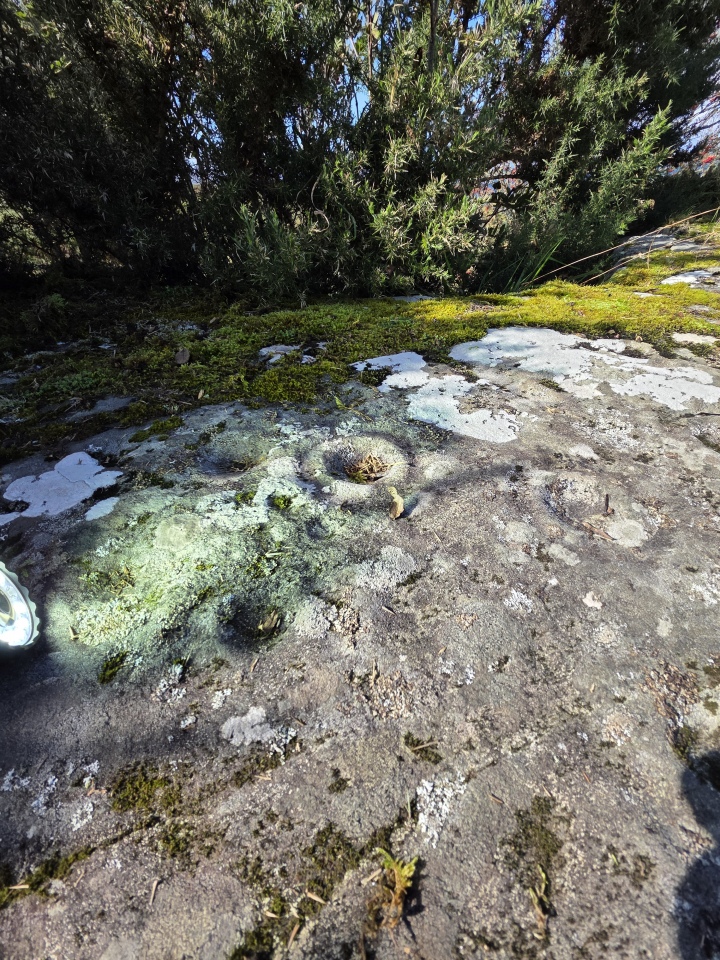
Neolithic and Bronze AgeIn a lovely location overlooking Kames bay and the mainland hills, but positioned so there are also views of North Arran. It's hard to get photos of the stones as the cairn is covered in gorse. A short but stiff hike up the hill from the road layby. Image submitted by drolaf
Submitted by Anne T on Sunday, 24 May 2026 (506 reads)
Early MedievalWith its early origins, we hunted around for any signs of a preaching cross, and whilst there were odd rectangular, worked sandstone blocks around the churchyard, I (Anne T) spotted this limestone Anglo Saxon cross base. A very pleasant location, and interesting to look around. More photos from the church, including Roman pottery, on our page Image submitted by Anne T
Submitted by h_fenton on Sunday, 24 May 2026 (9263 reads)
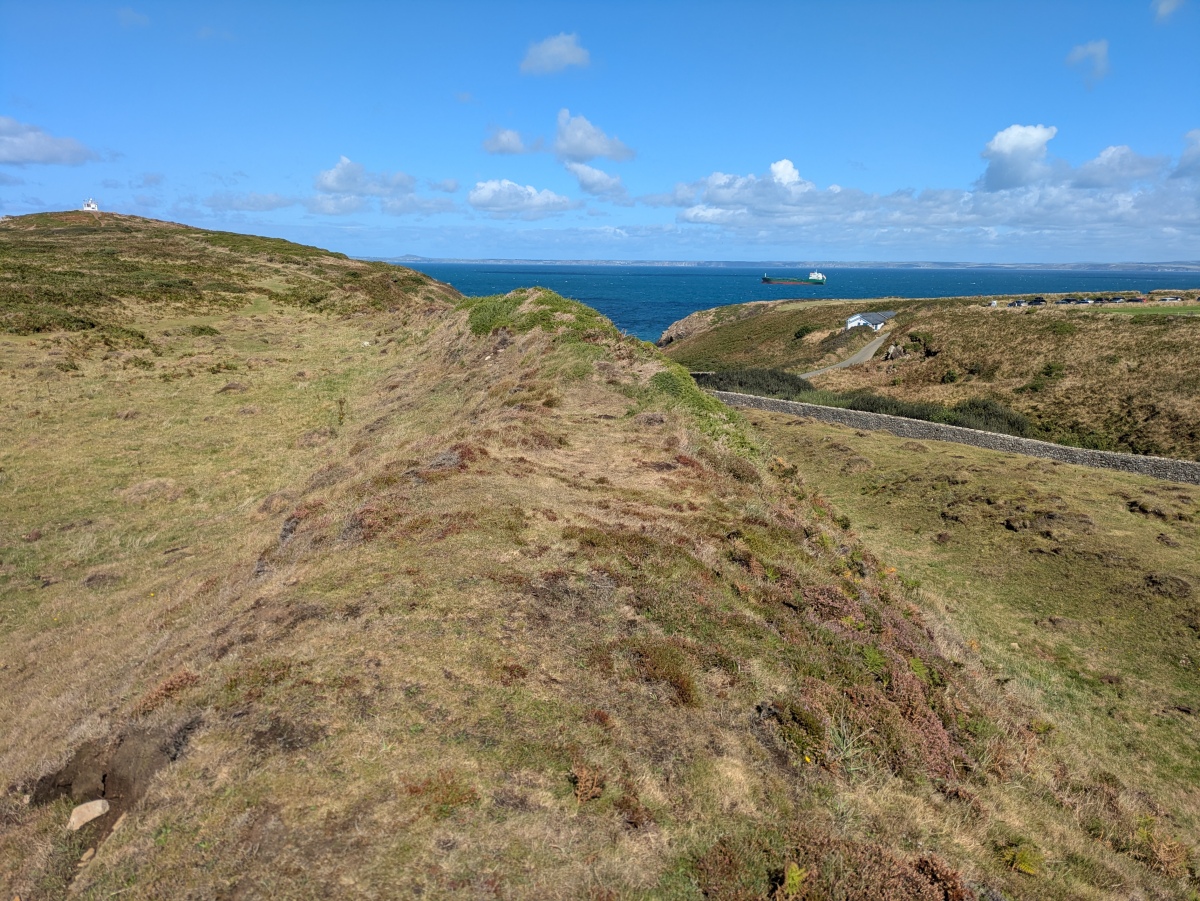
Neolithic and Bronze AgeA barrow 25 metres long by up to 12 metres across and 0.3 metres high. The barrow is aligned roughly southwest to northeast about 70 metres north of Uffington Castle. The long barrow also seems to be the focal point of a later Romano-British inhumation cemetery. Image submitted by Horatio
You can see the outline of the barrow in the centre - the white chalk path from the right is pointing at the barrow, between the horse and the fort Read Article | 1 News and Comments | Category: Our Photo Pages
Submitted by bat400 on Sunday, 24 May 2026 (10535 reads)
Pre-ColumbianThis Mississippian era village site in Cross County is an Arkansas State Park. The site includes a platform mound close on the river. Interpretation is provided by a museum and visitor center (see photos). It is highly likely that this is the village Hernando de Soto visited in 1541 and was described by his party as "Casqui". Image submitted by trylondm
Submitted by AngieLake on Saturday, 23 May 2026 (15540 reads)
Multi-periodA promontory fort some 5 acres in size was established at Lydney in or just before the 1st century BC and was subsequently during the 2nd. & 3rd. cents. CE, occupied by a Romano-British population engaged to some extent in iron-mining. Image submitted by AngieLake
Last chances to visit Lydney Park Gardens, Hillfort and Romano-British temple for this year are this Sun 24th, Mon 25th, Fri 29th, Sat 30th and Sun 31st May, more details in the comment on our page Read Article | 7 News and Comments | Category: Our Photo Pages
Submitted by Anne T on Thursday, 21 May 2026 (5924 reads)
Springs and Holy WellsTissington in Derbyshire is known as the mother place of well dressing and visitors come from all over the world to witness the annual well dressing ceremony. This takes place on Ascension Day, (May 14th this year) when five attractive wells are dressed together with a children’s well. Image submitted by Creative Commons